The starter's ratios, from 1:1:1 to the week away
A sourdough starter is a schedule disguised as a jar. The sourdough guide reduces the schedule to four ratios, all read the same way, starter : flour : water, by weight, and the choice among them is the entire management strategy: how fast it peaks, how often you feed, and how long it survives between your attentions.
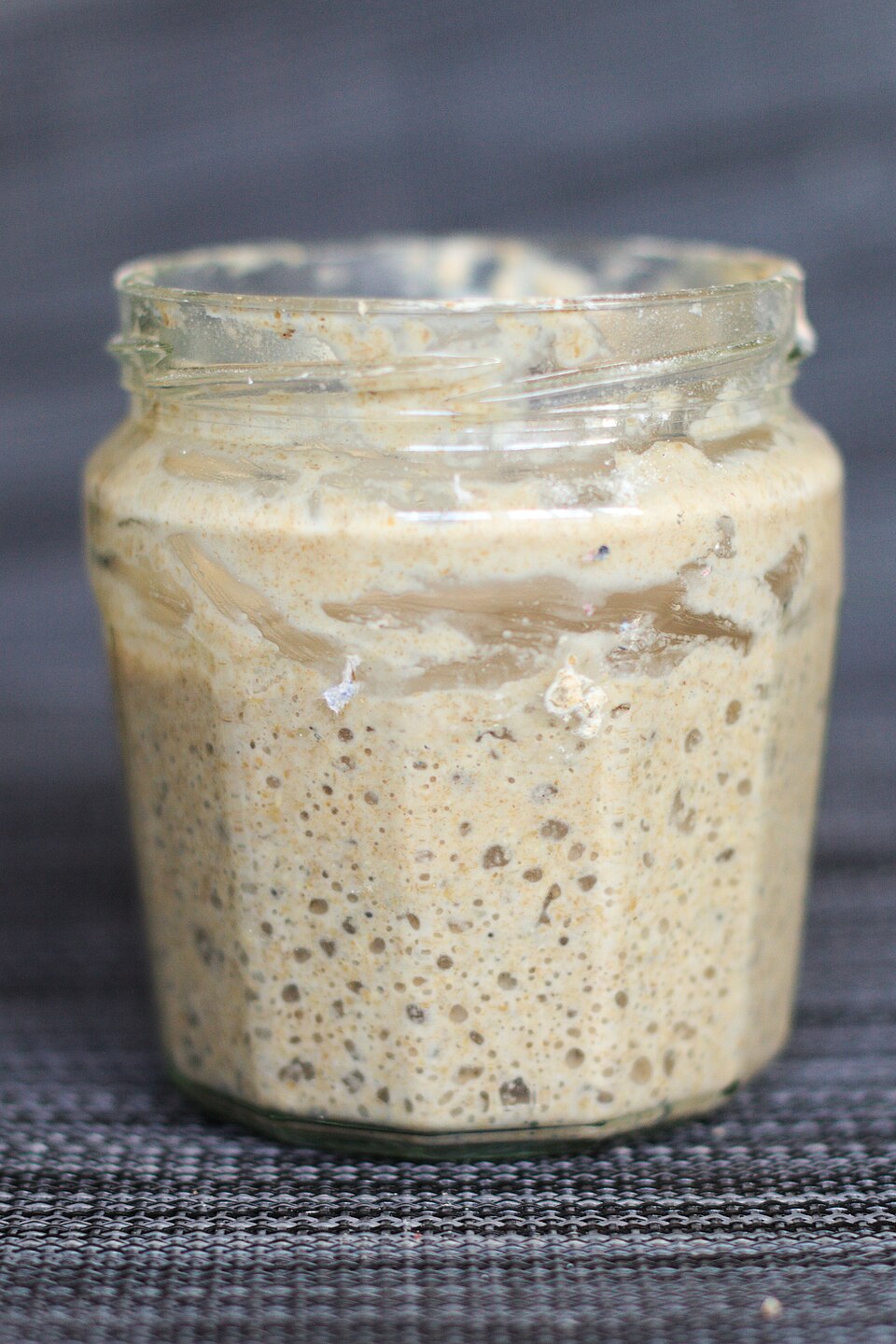

The ladder
- 1:1:1, the daily rhythm. Equal parts, each feed; the starter peaks in about 12 hours, which is why the twice-a-day baker lives here and why the baking test reads against it.
- 1:2:2, more food, more time between feeds.
- 1:5:5, the once-a-day pace. Five parts fresh flour and water for each part of carried-over starter: the acid and the colony are diluted enough that the calendar stretches without starving it.
- 1:10:10, the fridge bridge. Ten parts fresh on one of starter, cold; the guide's line for it is "survives a week away."
Bigger ratios mean slower; slower means fewer chores. The wiki's starter diagram carries the same idea as a picture: the ratio's denominator is your calendar.
The readiness test
The guide's bake-ready line doubles as the health check: a starter that doubles predictably within about 8 hours of feeding is ready to bake with. Along the way, the first days' wet-grass smells, the liquid (hooch) the guide says to skim or stir back in, the feeds at 1:1:1 through establishment, the ratios carry a new starter as much as an old one; the jar's care is the same arithmetic in maintenance mode.
And the discard
Feeding at any ratio leaves carry-over, and the guide's callout names the extra starter a feature: pancakes, crackers, quick breads, the discard is real food. The feeding card prints the ladder for the shelf above the jar; the app logs the jar's feeds and its peaks. The ratios are the management; the discard is the breakfast.
Label the batch. — the cellar crew